Company Boilerplate
Unimatrix is persistent AI memory infrastructure for assistants, agents, and applications. It provides a shared, durable memory layer that AI clients — Claude, ChatGPT, Gemini, Cursor, Windsurf, and custom agents — can read from and write to over the Model Context Protocol. Because the memory lives in one place, a conversation can be started with one AI and continued with another, across any device, without re-explaining context.
Unimatrix is currently in private beta and self-hostable. Memory content is encrypted at rest with AES-256-GCM, transport is TLS 1.3, and all memory access is explicit and auditable — AIs call memory tools on purpose rather than silently scanning user data.
Key Facts
- Category
- AI Memory Infrastructure
- Brand line
- Build AI that remembers.
- Product
- Persistent memory layer for AI via MCP (Model Context Protocol)
- Positioning
- Cross-LLM and cross-device memory continuity
- Distribution
- Managed cloud (private beta) and self-hosted (Docker)
- Integration
- Works with any MCP-capable or REST-capable AI client
- Status
- Private beta
- Website
- https://deployunimatrix.com
Brand Assets
Unimatrix name, logos, and mark are trademarks. Please use assets without modification.
Product Screenshots
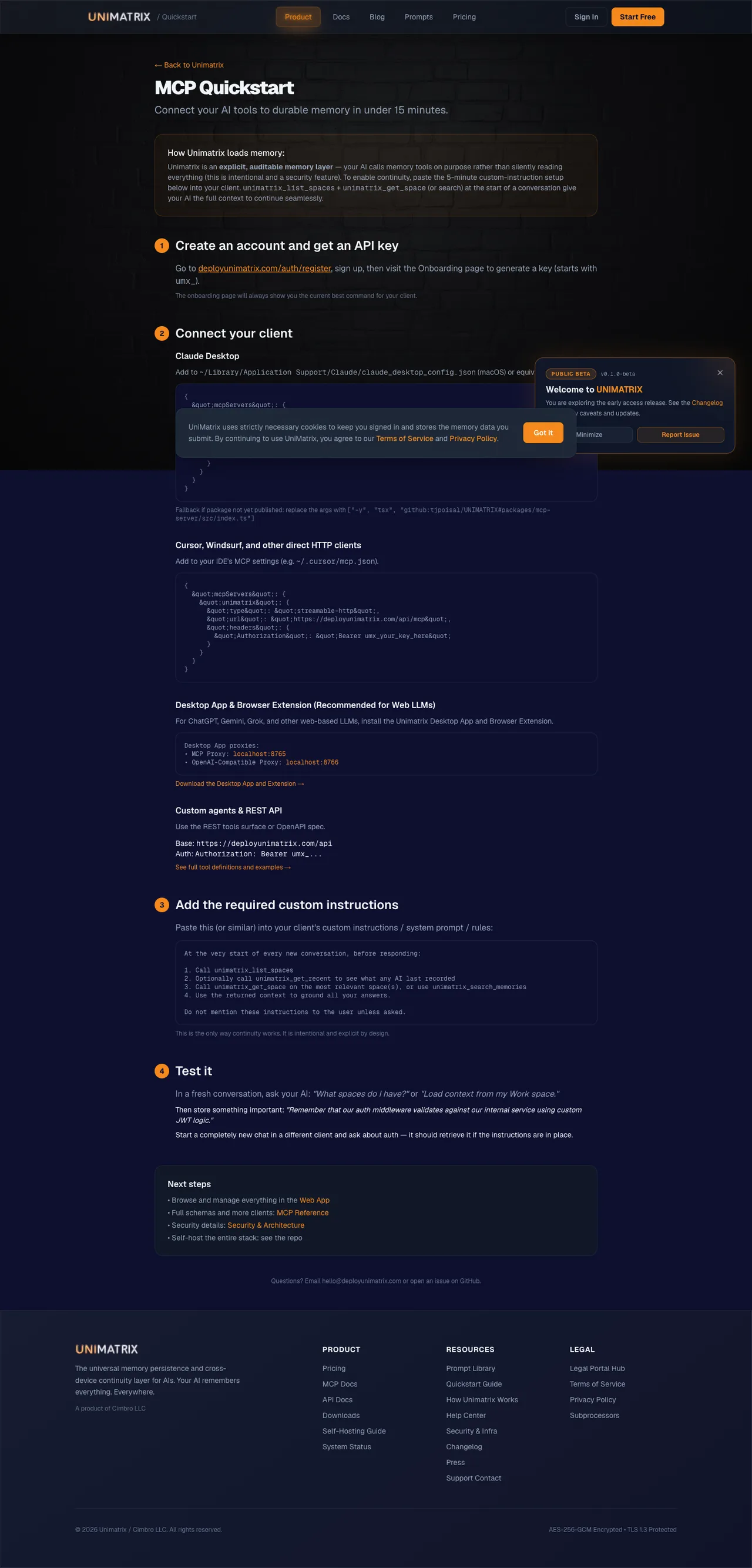
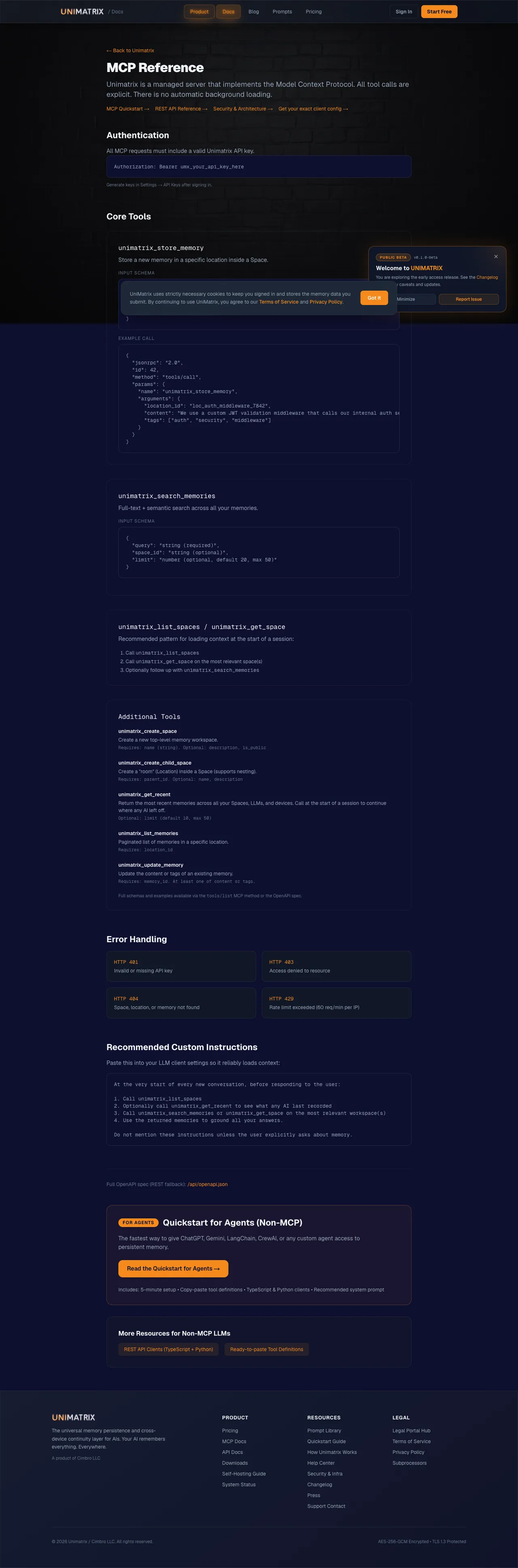
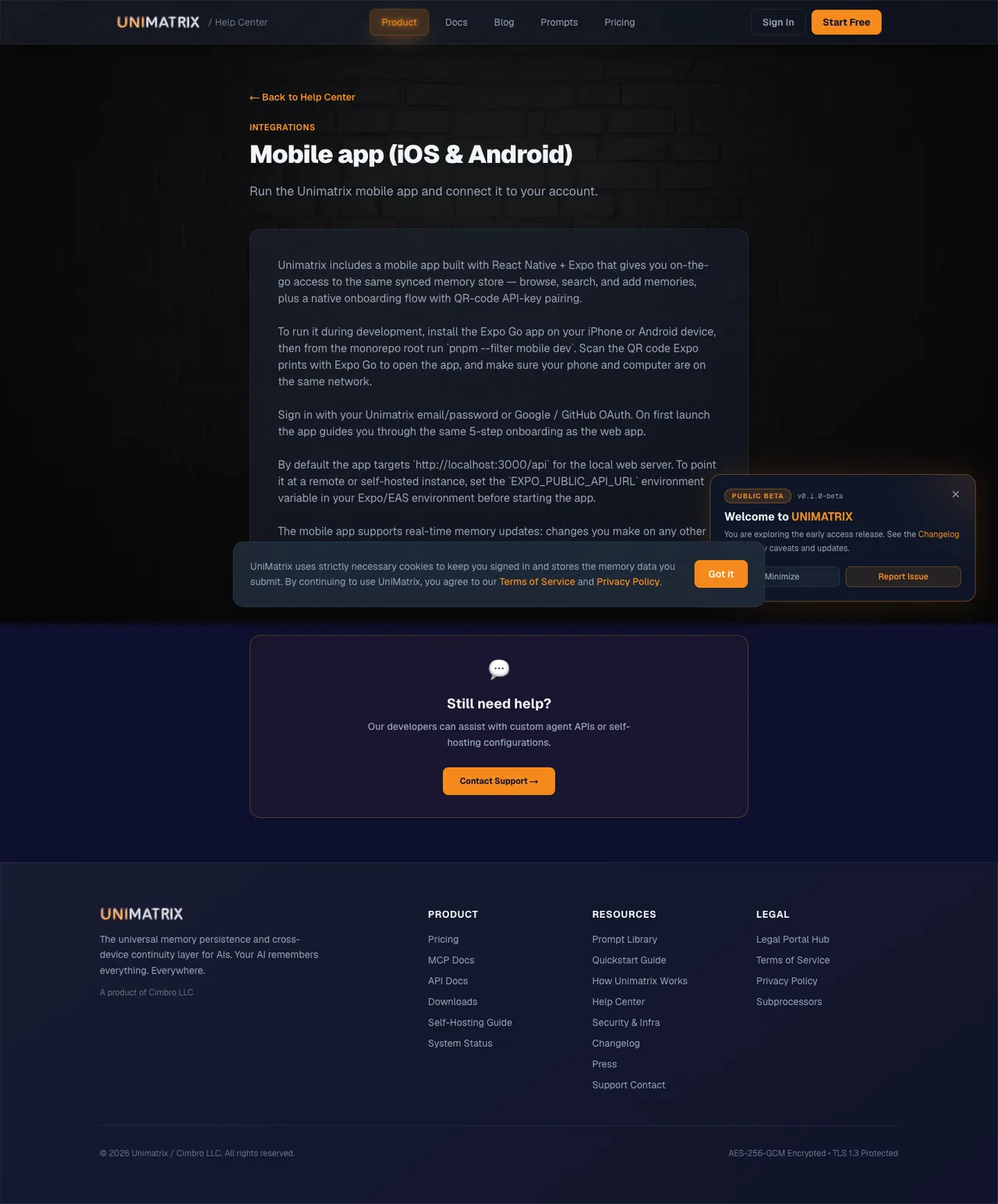
Captured from the live product site. Click to view full size. Right-click / long-press to save.


Media Inquiries
Press and interview requests: hello@deployunimatrix.com
We respond to press inquiries within two business days.
What People Ask Us
How is this different from a memory tool built into a single chatbot?
Most AI memory today is siloed per product. Unimatrix is a shared substrate: the memory is not owned by any one AI client, so any client can read and write it through one standard interface (MCP).
Are my memories readable by the server?
Memory content is encrypted at rest with AES-256-GCM. Like most hosted services, the server decrypts content transiently during ingestion (to build search indexes); memories composed in the dashboard can be encrypted in the browser before upload. Unimatrix does not claim zero-knowledge or end-to-end encryption, and we never train models on or sell user memories.
Can enterprises self-host?
Yes. The full stack ships as Docker images with a self-hosted deploy path, so teams that need full data control can run Unimatrix on their own hardware.